
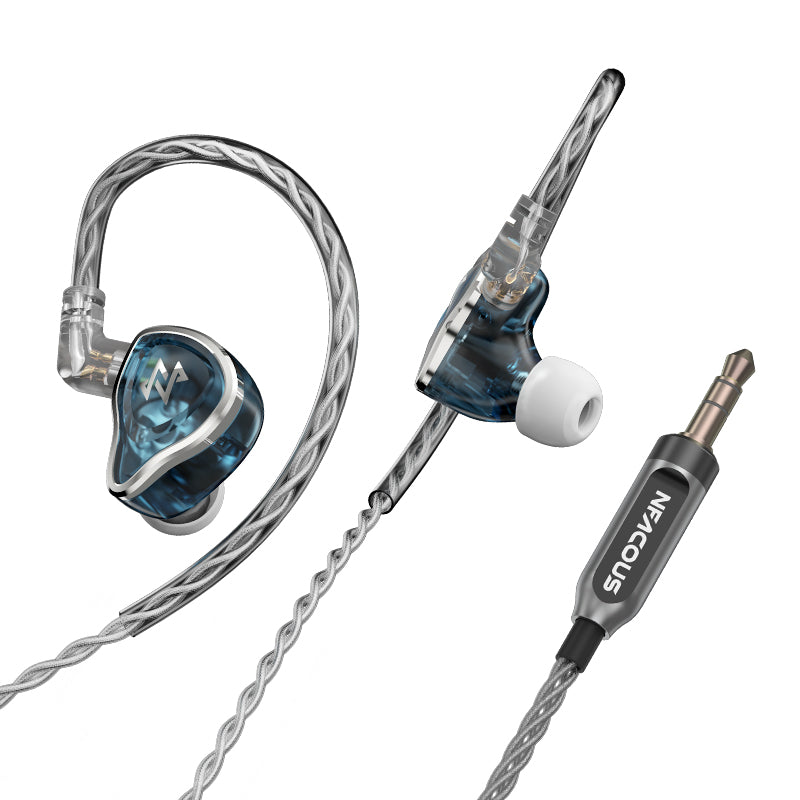

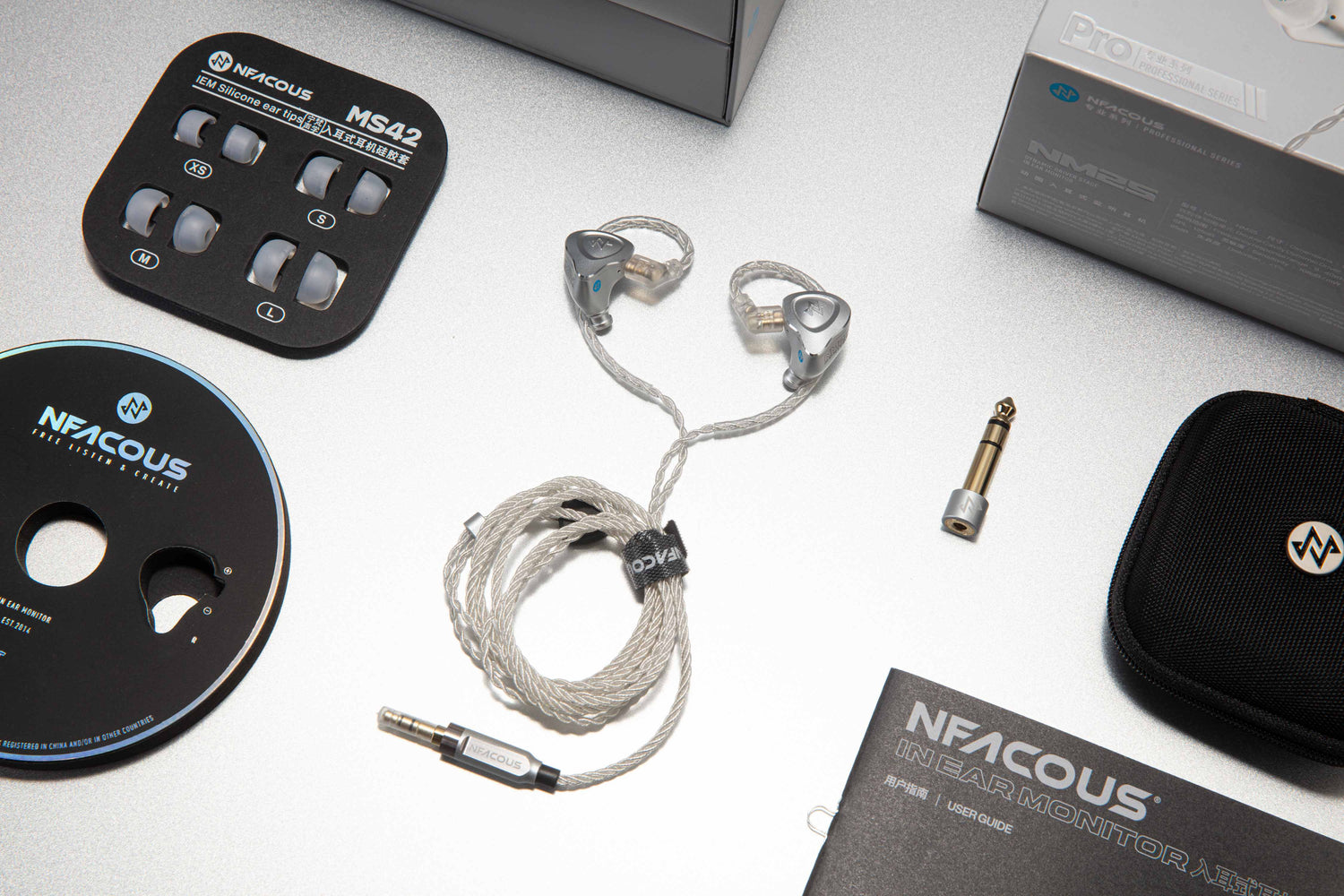
NF ACOUS Official Buying Guide
For many users new to professional in-ear monitor (IEM) , the most important question is not “Which model is more expensive?” but rather “Which model suits my needs best?”
This guide will help you clearly understand the positioning differences between NM2, NM2+, NM20, and NM25, and choose the right monitoring tool for your workflow.
1. NF ACOUS Philosophy: What Defines Professional Monitoring
At NF ACOUS, the core of monitoring is not just about “good sound” or “accuracy”—it’s about feedback.
For singers, musicians, producers, and creators, monitor IEM/earphones are not simply for listening, but an essential part of the entire audio workflow. Their true value lies in how effectively they deliver:
· Fine details
· Performance changes
· Real-time feedback
This enables users to make better judgments during:
· Rehearsals
· Live performances
· Recording sessions
· Music production
Why Dynamics & Transient Response Matter
NF ACOUS places strong emphasis on dynamic range and transient response. Only when these are well preserved can the following be accurately reproduced:
· Attack and decay
· Edges and articulation
· Rhythm and impact
· Micro-details
For professional monitoring, this is often more important than a visually “perfect” frequency response curve.
Engineering Approach
All NF ACOUS professional IEMs feature:
· Dual magnetic circuit design
· Dual acoustic chamber structure
This provides:
· Stronger driver control
· Enhanced waveform reproduction
· More precise and direct feedback
Unlike some brands, NF ACOUS avoids excessive damping purely to smooth frequency response curves. Over-damping may look “clean” on paper but can compromise:
· Dynamics
· Transients
· Natural tonal character
Instead, NF ACOUS focuses on:
Preserving dynamics, maintaining tonal integrity, and delivering unaltered waveform feedback.
2. Monitoring Is Not Just Sound — Fit Matters Too
For in-ear monitor headphones, fit is just as important as sound.
Whether on stage or in the studio, IEMs must provide:
· Stability
· Comfort
· Secure sealing
Only then can monitoring feedback remain reliable.
Ergonomic Design Evolution
NF ACOUS ergonomic design is based on years of custom IEM experience and real ear impression data.
· NM2 / NM2+ → First-generation ergonomic design
· NM20 / NM25 → Second-generation optimized design
Second-generation improvements include:
· Shorter nozzle length
· Better ear contour fit
· More natural wearing experience
· Improved long-term comfort
3. Define Your Needs Before Choosing
Before selecting an IEM, clarify your primary use case:
Stage Monitoring Focus
If you mainly need IEMs for:
· Live performances
· Rehearsals
· Stage monitoring
You’ll likely prefer:
· Direct and clear sound
· Solid low-frequency support
· Lightweight comfort for long sessions
Studio & Reference Use
If you also need:
· Studio monitoring
· Recording
· Mixing / composing
Then you’ll benefit more from:
· Flatter frequency response
· Balanced sound signature
· Higher reference accuracy
4. Product Positioning Overview
Stage-Oriented Models: NM2 / NM20
Designed for:
· Live stage monitoring
· Rehearsals
· Performance environments
Differences:
· NM2: Stronger bass presence, more traditional stage feel
· NM20: Deeper bass extension, tighter control, more detail, larger soundstage
Hybrid Use (Stage + Studio): NM2+ / NM25
Designed for users who need both:
· Stage performance
· Studio reference monitoring
Features:
· Controlled bass
· Flatter tuning
· Better balance and detail
5. First-Gen vs Second-Gen Technology
First Generation (NM2 / NM2+)
· Driver: MC2L-10
· Diaphragm: Composite polymer
· Represents early NF ACOUS tuning philosophy
Second Generation (NM20 / NM25)
· Drivers: MC2L-100P / MC2L-100A
· Diaphragm: Beryllium-coated polymer
· Improved durability and structure
· More refined acoustic performance
6. Shell Materials & Use Cases
Polycarbonate Shell (NM2 / NM20)
· Lightweight
· Ideal for stage use
· Comfortable for long sessions
CNC Aviation Aluminum (NM2+ / NM25)
· Premium build quality
· More refined sound
· Better for users valuing craftsmanship and detail
7. Why NM25 Is the Most Advanced Model
The NM25 stands out with the most complete feature set.
Key Technologies
Zoned Damping System
· Different damping densities for different frequencies
· More controlled dynamics
· Improved frequency balance
Clutter Trap 2.0 (Helmholtz Resonance Technology)
· High-precision cavity (0.02mm accuracy)
· Reduces tube resonance
· Smooths high frequencies
Importantly:
This is achieved without sacrificing dynamics or transient response.
Result:
· More mature sound
· Higher reference accuracy
· Better overall balance
8. Which Model Is Right for You?
NM2
Best for:
· Stage monitoring
· Strong bass support
· Lightweight performance
NM2+
Best for:
· Hybrid stage + studio use
· Balanced tuning
· Premium build
NM20
Best for:
· Stage-focused users
· Modern tuning
· Better durability
NM25
Best for:
· Professional monitoring
· Studio reference
· Maximum detail and refinement
9. Can These IEMs Be Used for Music Listening?
Yes—but keep in mind:
These are professional monitoring IEMs first.
Recommendations:
· Prefer strong bass & live feel → NM2
· Want modern tuning & better detail → NM20
· Prefer balanced, detailed sound → NM2+
· Want the most refined listening experience → NM25
10. Quick Selection Guide
|
Model |
Positioning |
Bass |
Material |
Best For |
|
NM2 |
Stage (Gen 1) |
Strong |
Polycarbonate |
Live performers |
|
NM2+ |
Hybrid (Gen 1) |
Controlled |
Aluminum |
Studio + stage users |
|
NM20 |
Stage (Gen 2) |
Deep & tight |
Polycarbonate |
Durable stage use |
|
NM25 |
Hybrid (Gen 2) |
Balanced |
Aluminum |
Professional reference |
11. Final Thoughts
Choosing professional in-ear monitors is not about price or specifications alone.
What truly matters is:
· Whether it fits your workflow
· Whether it delivers the feedback you need
NF ACOUS offers four models built on the same philosophy—but designed for different:
· Use cases
· Sound preferences
· Technical approaches
Ultimately:
Choosing an IEM is choosing the right feedback tool for your work.

Leave a comment
This site is protected by hCaptcha and the hCaptcha Privacy Policy and Terms of Service apply.