

Why Headphones Can Make You Sing Harder
What singers need to hear from a monitor mix
Headphones change the way you hear your own voice. The microphone signal returns through the earphones, while your voice also reaches you through air, bone, soft tissue, and the ear canal. With a sealed fit, that internally conducted voice can feel fuller, boomier, or more "inside the head." If the monitor mix then masks the cues that reveal articulation, onset, and level changes, you may compensate by singing louder or using more effort. Good vocal monitoring is therefore not simply brighter or louder. It should make useful mid-to-high-frequency detail, timing edges, and vocal separation easy to perceive. When those cues are clear, a singer is less likely to push just to confirm what the voice is doing.
1 You hear more than the signal in your earphones
The voice you hear while singing is a combination of several paths.
One path is the electronic return: the microphone captures your voice, and the console, interface, or monitor system sends it back to your ears. This is the signal that most closely represents what the recording or sound system is receiving.
At the same time, your own voice reaches you through the air and through the body. "Bone conduction" is often used as shorthand, but the full picture also includes the skull, soft tissue, and the ear canal. These paths are present even without headphones.
Sealed headphones and in-ear monitors change the balance between them. Outside sound is reduced, and the occlusion of the ear canal can make the lower-frequency part of your internally conducted voice feel stronger. Some singers hear a voice that seems thicker, darker, or more centered in the head.
That creates a useful way to frame the problem: your body may be telling you that the voice is already big, while the monitor mix still fails to reveal what the microphone is hearing.
In that situation, adding more overall level may not supply the missing information. It can simply make an unclear mix louder.
2 Why unclear monitoring can make you push
Auditory feedback is part of vocal control. When noise or accompaniment masks the voice, people often raise their vocal level without making a deliberate decision to do so. When their own voice is returned more clearly, vocal level often decreases. This family of automatic responses is commonly associated with the Lombard effect.
Singing is more complex than ordinary speech. Training, repertoire, vocal range, microphone choice, stage volume, and personal habit all influence the response. The same monitoring problem will not make every singer react in the same way.
Even so, the practical pattern is familiar: the singer cannot clearly hear whether a consonant landed, whether an onset was clean, or whether a phrase grew louder. The body answers, "Give it a little more." Repeated across a performance, that compensation can turn into a larger, heavier vocal gesture.
The result is a paradox. The singer works harder to gain control, yet the extra level can make articulation, dynamics, and tone harder to manage.
3 The cues singers need from vocal monitoring
Clarity is not a single treble control. For vocal monitoring, it depends on several types of information working together.
Mid and upper-mid detail
The fundamental pitch is only part of the voice. Consonants, articulation edges, breath noise, sibilance, onset, and many timbral changes rely on mid- and high-frequency cues.
At the same time, internally conducted sound can make the low and low-mid region feel unusually full. Guitars, keyboards, backing tracks, and reverb may also compete with the vocal in nearby frequency ranges. If a monitor adds more weight without revealing the edges of the voice, the result can be large but indistinct.
For many vocal-monitoring tasks, a more controlled low-mid presentation and a more visible upper-mid region can make articulation easier to judge. That does not mean that every singer needs the same EQ, or that more treble is always better. The goal is audibility of the action, not brightness for its own sake.
Transient response
Every onset, consonant, phrase ending, and level change has a time edge. If the monitor sounds slow or blurred, the link between the movement and the result becomes less direct.
A faster transient character can make short changes easier to recognize, provided that the spectrum, level, and rest of the signal chain are already under control. Transient speed is not a guarantee on its own, but it can help the monitor keep pace with the singer's actions.
Resolution and separation
Resolution determines whether fine changes can be distinguished. Separation determines whether the vocal remains identifiable when instruments, effects, and room sound become dense.
When both are weak, the intuitive response is often to turn the vocal up or sing harder. When detail and layers remain available, the singer can make decisions from information instead of trying to win a volume contest.
4 A typical monitoring profile for singers

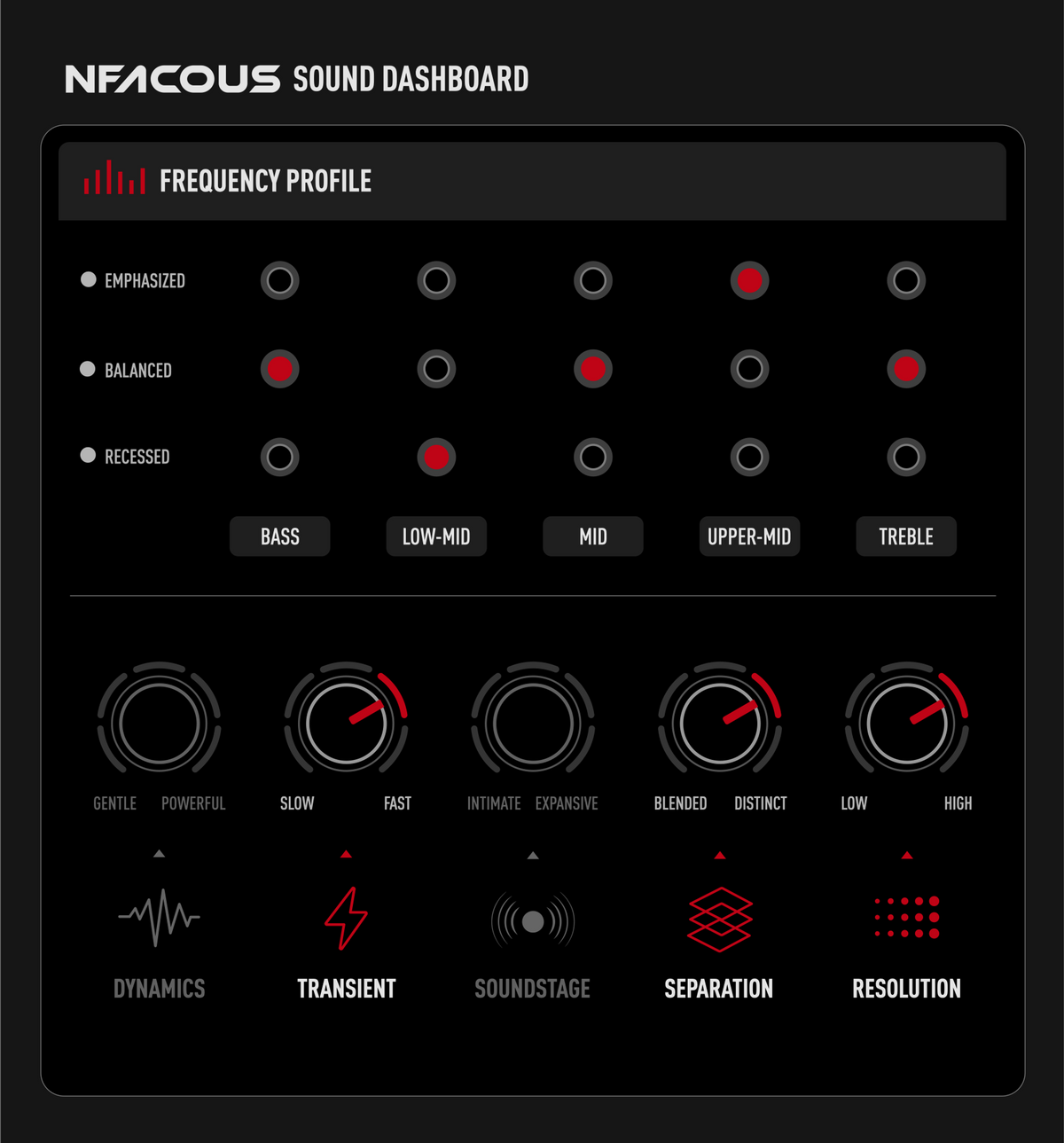
Figure 1 A general monitoring profile for singers. Grayed-out dimensions are not the focus of this article. The dashboard shows relative listening priorities, not a frequency-response measurement or product score.
The dashboard shows a general task profile rather than a universal prescription. Bass is balanced, the low-mid region is recessed, the midrange is balanced, the upper-mid region is emphasized, and treble is balanced. Transient, Separation, and Resolution are set to 4 because this article prioritizes fast, intelligible, and well-separated feedback.
Dynamics and Soundstage are intentionally grayed out. That does not mean that they have no value; it means that they are not the primary variables in this particular explanation.
This profile is a relative listening map. It is not a frequency-response measurement, a product score, an NM20 measurement, or a fixed EQ recipe. The singer, ear canal, eartip seal, microphone, monitor mix, processing, and stage environment all change the result.
5 One product example: NM20
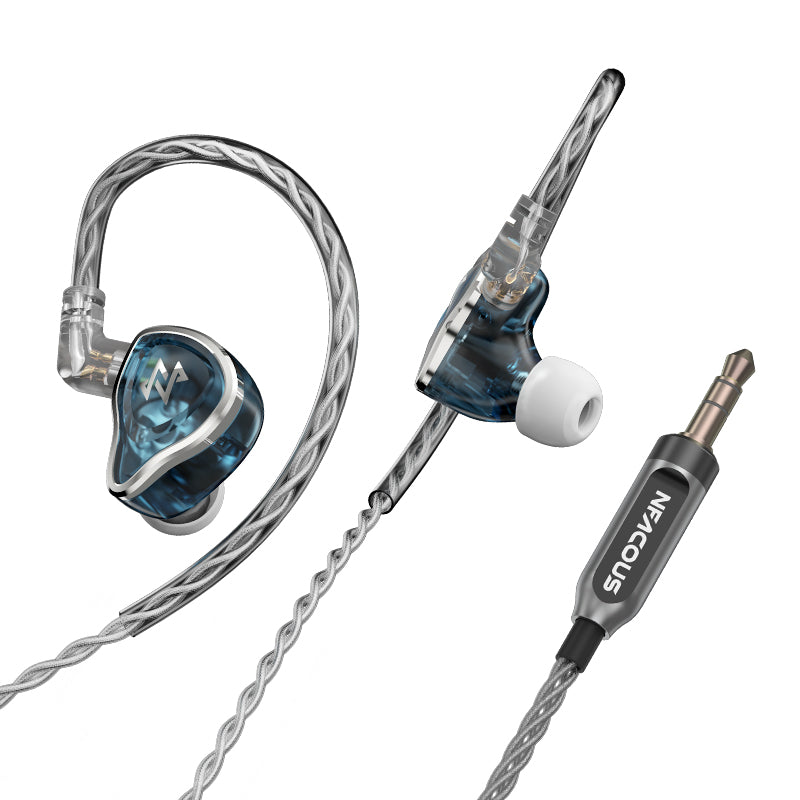
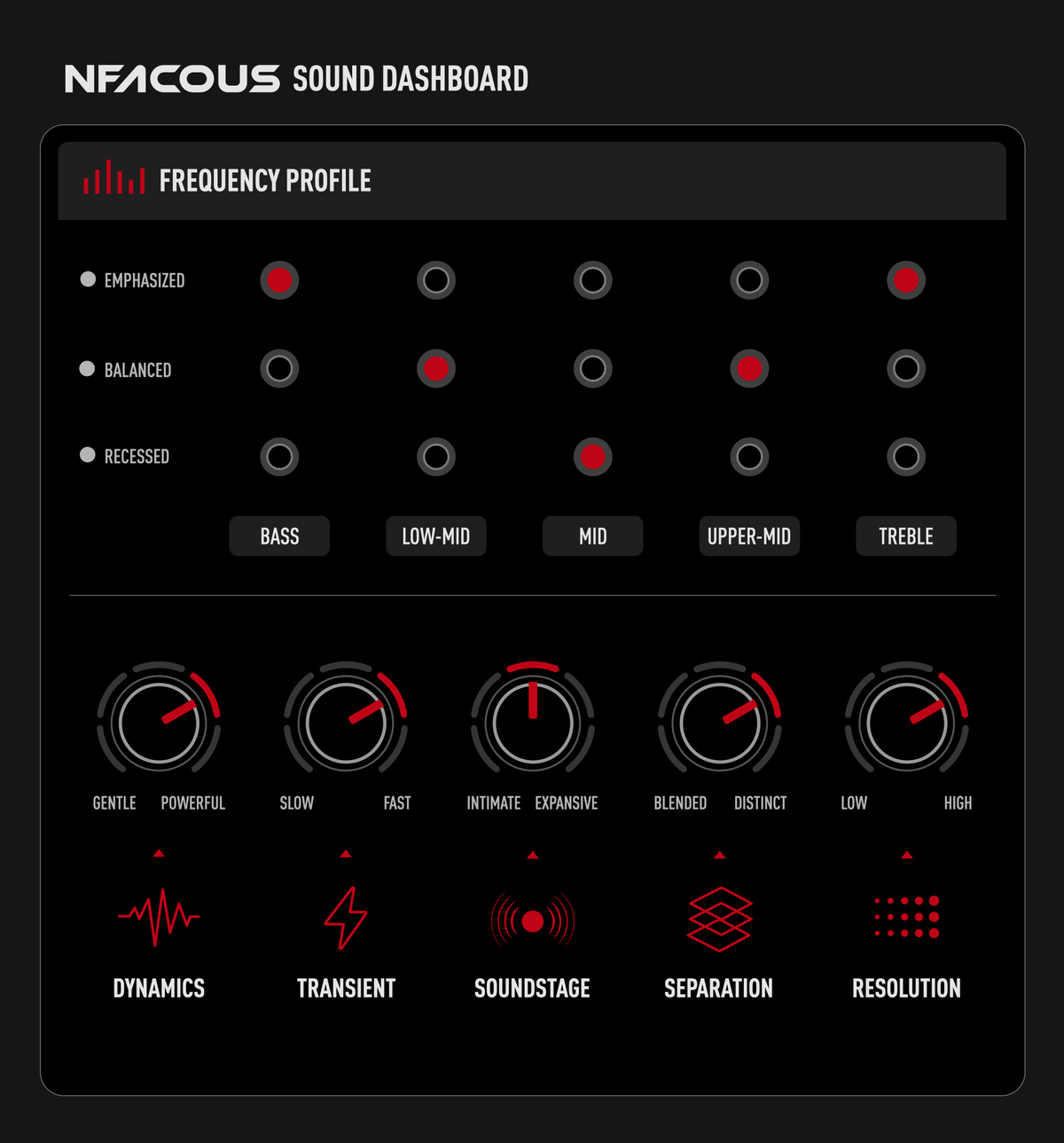
NM20 is part of the NF ACOUS Professional Series and is intended for stage and studio monitoring. Its mid-to-high-frequency balance is slightly elevated, combined with fast transient response, high clarity, and sufficient dynamics. The aim is not to make every recording sound more flattering, but to make articulation, onset, release, and level changes easier to hear. Clarity also depends on the diaphragm starting and stopping quickly and preserving detail, not merely on making the upper range more prominent.
When extra effort is caused in part by unclear feedback, this monitoring approach may reduce the need to use a larger vocal gesture just to hear confirmation. It does not replace a well-built monitor mix, vocal technique, or health evaluation. For casual music listening, the presentation may feel more direct or less forgiving; harshness, sibilance, and fatigue are not proof of professional tuning.
6 If you are singing harder in headphones, check these first
- Lower the backing track before raising the total headphone level again.
- Place the microphone vocal at a level where it can be identified consistently.
- If the vocal is loud enough but still sounds thick or muffled, reduce unnecessary bass and low-mid buildup.
- If articulation remains unclear, check whether the mid- and upper-frequency action cues are being masked.
- Check monitoring latency, excessive compression, and too much reverb. Each can blur the relationship between the action and the result.
- Confirm that the eartips seal consistently and that both sides remain stable before comparing earphones or EQ changes.
- Use the same short passage for an A/B test. Keep the microphone, backing track, and singing intention unchanged, and alter only one monitoring condition at a time. Observe whether you still become louder across the phrase, and whether articulation, pitch, dynamics, and perceived fatigue improve in a repeatable way.
If the vocal gesture remains tense after monitoring changes, or if you experience persistent hoarseness, pain, or unusual fatigue, do not assume that the earphones are the whole problem. Technique, daily condition, and vocal health require separate judgment.
7 Good monitoring reveals the action
A singer's monitor should first reveal what changed: Was the consonant clear? Did the note begin when intended? Did the phrase become heavier than the one before it? Did the ending release cleanly?
You can adjust an action only after you can hear it. When feedback is clear, timely, and easy to separate, the singer has a better chance of letting go of the instinct to "sing a little bigger" and putting that effort back into expression.
Good vocal monitoring does not decorate the voice. It makes change audible.
Frequently asked questions
Do vocal monitors need to sound bright?
No. The goal is to keep the important mid- and high-frequency vocal cues identifiable in the actual monitor mix. A controlled upper-mid emphasis is one method, but reducing low-mid masking, lowering the backing track, and setting the vocal at the right relative level are equally important. Brighter and harsher do not mean more professional.
Why can professional monitors sound more direct for music listening?
Professional monitoring may prioritize the exposure of actions and changes rather than smoothing every recording into an easy presentation. Information that is useful while performing may not match every listener's casual preference. Obvious sibilance, sharp peaks, or fatigue should still be treated as problems, not as selling points.
Will a brighter earphone automatically make singing easier?
No. The mid-to-high-frequency balance is only one part of the feedback chain. Backing-track masking, vocal level, latency, dynamics processing, eartip seal, and vocal technique can all affect the result. The useful target is audible action information, not brightness by itself.
References
- Modifications of auditory feedback and its effects on the voice of adult subjects: a scoping review. PMCID: PMC10750862. View source
- Bottalico P, Graetzer S, Hunter EJ. Effect of Training and Level of External Auditory Feedback on the Singing Voice: Volume and Quality. PMCID: PMC4713388. View source
- Sugimori E, et al. Auditory traits of "own voice". PMCID: PMC6019673. View source
- Rumsey F, McCormick T. Sound and Recording, 6th ed., PDF pp. 58–63.
- Howard DM, Angus J. Acoustics and Psychoacoustics, 4th ed., PDF pp. 404–408.
- Case A. Mix Smart, PDF pp. 39–43; Izhaki R. Mixing Audio, PDF pp. 309–314.
- NF ACOUS. NM20 official product page. View source

Leave a comment
This site is protected by hCaptcha and the hCaptcha Privacy Policy and Terms of Service apply.